
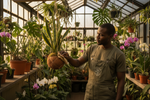
The Lush Standard: How Tropical Orchids Keeps Every Kokedama Looking Immaculate
, by suraj shah, 6 min reading time
, by suraj shah, 6 min reading time
After 10 years of growing tropical plants in Nairobi, we've distilled our entire care philosophy into four fundamentals. Master these and your kokedama will thrive for years.
"Why do your kokedamas look so much healthier than the ones I've seen elsewhere?" — the question we hear every week.

The foundation of every Tropical Orchids kokedama — natural Kenyan coco fibre, no moss.
It isn't a secret fertiliser. It isn't daily watering. And it certainly isn't talking nicely to them.
The secret is four fundamentals, applied consistently:
✓ Putting the right plant in the right location
✓ Proper watering
✓ Maintaining humidity
✓ Preventing pests before they become a problem
Most struggling plants are simply growing in the wrong place. Master placement, watering, humidity, and maintenance — and your kokedama can remain healthy and beautiful for years.
After more than 10 years of growing plants through Herbivore and Tropical Orchids, one lesson stands above all others:
"Plant placement is far more important than watering."
A perfectly watered orchid in harsh afternoon sun will struggle. A lucky bamboo in direct sunlight may scorch. A jade plant in deep shade may become weak and stretched. No amount of fertiliser compensates for poor positioning.
East-Facing Balconies — Gentle morning sunlight. The easiest and most rewarding location. Ideal for orchids, air plants, bromeliads, monsteras, anthuriums, pothos, philodendrons, ferns, and lucky bamboo.
West-Facing Balconies — Hot afternoon sun. Choose tougher species: jade plants, dracaenas, sansevierias, rosemary, and succulents.
North & South-Facing Balconies — Little or no direct sun. Excellent for ficus trees, lucky bamboo, anthuriums, peace lilies, pothos, monsteras, ZZ plants, bromeliads, and sansevierias.
After correct placement, watering is the second most important factor. And it is simpler than most people expect.
Fill a Bucket — Use clean, room-temperature water deep enough to fully submerge the kokedama ball.
Submerge — Place the entire coco fibre ball into the water. Bubbles emerging from the ball are normal — water is replacing air within the growing media.
Soak for 10 Minutes — This ensures moisture reaches the entire root system, far more effectively than surface pouring.
Remove and Drain — Allow excess water to drain completely. Never leave the ball sitting permanently in water. Roots require oxygen as well as moisture.
Return to Display — Place back on its stand, shelf, table, or hanging position.
"We water in the morning. Plants hydrate before the heat of the day, surface moisture dries naturally, and disease pressure is reduced."
Tropical plants evolved in rainforests. Apartment living — especially on windy Nairobi balconies — can create drier conditions than these plants prefer.

A light misting keeps humidity-loving tropicals fresh and vibrant between waterings.
Most of our tropical kokedamas receive a light misting — particularly orchids (heavy misting), air plants (heavy misting), bromeliads, anthuriums, ferns, and monsteras. A quick spray helps maintain humidity around the foliage and recreates the conditions these plants experience in nature.
One of the most overlooked aspects of plant care is cleanliness. Dust and pollution accumulate on leaves over time. A dirty leaf cannot photosynthesise as efficiently as a clean one.

Our team wiping down a snake plant kokedama — a simple habit that makes a visible difference.
Once a month, we dilute neem oil according to label directions and gently wipe both the upper and lower surfaces of leaves with a soft cloth. This single routine removes dust, improves appearance, discourages pests, and keeps foliage glossy and healthy.
Neem oil helps discourage aphids, mealybugs, scale insects, and spider mites — the most common pests affecting tropical houseplants in Nairobi.
Water alone is not enough. Even the healthiest kokedama will eventually consume the nutrients within its growing media. This is why feeding matters.
At Tropical Orchids, our favourite supplement is seaweed extract. It provides trace minerals, natural growth stimulants, root development support, improved resilience, and enhanced flowering — and it is gentle enough for most tropical plants.
The easiest method is foliar feeding: dilute seaweed according to instructions and spray directly onto the foliage. Plants absorb nutrients through both roots and leaves.
Daily — Check plant health, monitor moisture, water when required, mist humidity-loving species.
Weekly — Inspect foliage, check for pests, remove dead leaves, monitor growth.
Monthly — Clean leaves, apply diluted neem oil, feed with seaweed fertiliser, inspect overall plant condition.
"Consistency is far more important than complexity."
A beautiful kokedama is not created by luck. It is created through simple, consistent care.
Choose the correct location. Water using the soak-and-drain method. Mist humidity-loving species. Wipe leaves monthly with diluted neem oil. Feed regularly with seaweed fertiliser.
These are the same techniques we use every day at Tropical Orchids and Herbivore to keep our kokedamas looking lush, vibrant, and full of life.
"Follow these principles and your coco fibre kokedama will reward you with years of beautiful growth — a living piece of tropical art in your Nairobi home."
Written by Suraj Shah, Chief Executive Gardener at TropicalOrchids254.
Suraj Shah has over 10 years of experience growing orchids, air plants, Kokedamas, tropical plants, edible gardens and landscape projects across Kenya.
The Living Art Revolution: Kenya's Coco Fibre Kokedama
Discover what a coco fibre kokedama is, why we use Kenyan coco fibre instead of moss, and how these living sculptures are transforming homes across Nairobi.
The Art of Watering: How to Keep Your Coco Fibre Kokedama Thriving in Nairobi
Master the Tropical Orchids soak-and-drain method and learn exactly how often to water your kokedama based on your plant species and Nairobi balcony direction.


