
The Living Art Revolution: Kenya's Coco Fibre Kokedama
, by suraj shah, 6 min reading time
, by suraj shah, 6 min reading time
Forget the flower pot. Kenya's most exciting plant trend is a handcrafted coco fibre kokedama — and it's transforming homes, offices, and hotels across Nairobi.
"Forget the flower pot. The future of plant styling is a handcrafted Kokedama of natural Kenyan coconut fibre — and it's growing." 
Imagine walking into a room and seeing a beautiful orchid suspended in mid-air, a sculptural lucky bamboo sitting elegantly on a coffee table, or a towering ficus topiary standing proudly in a handcrafted natural fibre sphere rather than a plastic pot.
This is the world of kokedamas — and at Tropical Orchids, we have reimagined it entirely for Kenya.

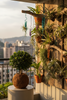
Anthuriums, peace lilies, and philodendrons — all in coco fibre kokedamas on a Nairobi balcony.
The word Kokedama originates from Japan and translates to "moss ball." Traditionally, a plant's roots are wrapped in a growing medium and covered with moss, creating a living sculpture that replaces the conventional flower pot.
At Tropical Orchids, we have taken this centuries-old concept and reimagined it for Kenya — replacing imported moss with locally sourced Kenyan coconut fibre, creating something more sustainable, more practical, and more beautiful.

Every Tropical Orchids kokedama is individually assembled by our team of horticultural specialists — people who understand tropical plants, local growing conditions, and the needs of Kenyan homes and businesses.

Our artisans at work — handcrafting each kokedama in our Nairobi workshop.
When you purchase a Tropical Orchids kokedama, you are supporting:
Traditional Japanese kokedamas are wrapped in moss. While beautiful, moss presents real challenges in Kenya — it's difficult to source sustainably in East Africa, and harvesting it from natural environments can degrade ecosystems.
Kenya already provides one of the world's best natural alternatives: coconut fibre.

By using Kenyan coco fibre, we create a product that is sustainable, renewable, locally sourced, durable, and naturally attractive — and far better suited to our tropical climate.
Perhaps the greatest advantage of a kokedama is its versatility. Unlike a conventional pot, a kokedama can be displayed in many different ways.

A Nairobi balcony transformed with hanging and standing coco fibre kokedamas.
On a Stand — Elevate the plant into a sculptural centrepiece for dining tables, reception desks, and office spaces.
Suspended from Above — Create a floating garden effect, ideal for apartments, pergolas, and balconies.
Floor Statement Pieces — Large ficus topiary kokedamas make dramatic focal points for hotel entrances and luxury residences.
On a Shelf — The natural fibre texture contrasts beautifully against modern interiors.

Boutique hotels, restaurants, cafés, and corporate offices are increasingly choosing kokedamas because they create a memorable guest experience. Unlike standard potted plants, kokedamas immediately attract attention — and conversation.
"What is that?" — the question every guest asks. And that curiosity is your brand story, told by a plant.

As apartment living grows in Nairobi, kokedamas offer the perfect solution — they occupy less visual space, can be hung vertically, work on balconies, and create a lush tropical atmosphere even in the smallest rooms.

Coco fibre kokedamas — beautifully packaged as wedding gifts.
Perhaps the most magical aspect of a kokedama is that it is never truly finished. Unlike a sculpture that remains unchanged, a kokedama evolves. Leaves unfurl. Roots develop. Flowers bloom. New growth appears.
Every kokedama tells a living story.
When you purchase a Tropical Orchids kokedama, you are receiving far more than a plant:
✓ Handcrafted Kenyan craftsmanship
✓ Sustainable, locally sourced coco fibre
✓ Custom plant-specific growing media
✓ Over 10 years of horticultural expertise
✓ A healthier alternative to imported moss systems
✓ A versatile styling solution
✓ A living piece of botanical art
✓ Designed specifically for Kenyan growing conditions

"At Tropical Orchids, we believe the future of indoor gardening is not simply about growing plants — it is about creating living environments that inspire people every day."
The Art of Watering: How to Keep Your Coco Fibre Kokedama Thriving in Nairobi
Master the Tropical Orchids soak-and-drain method and learn exactly how often to water your kokedama based on your plant species and Nairobi balcony direction.
The Lush Standard: How Tropical Orchids Keeps Every Kokedama Looking Immaculate
Learn the exact nursery routine we use every day — placement, misting, neem oil, and seaweed feeding — to keep hundreds of kokedamas thriving.
Written by Suraj Shah, Chief Executive Gardener at TropicalOrchids254.
Suraj Shah has over 10 years of experience growing orchids, air plants, Kokedamas, tropical plants, edible gardens and landscape projects across Kenya.


